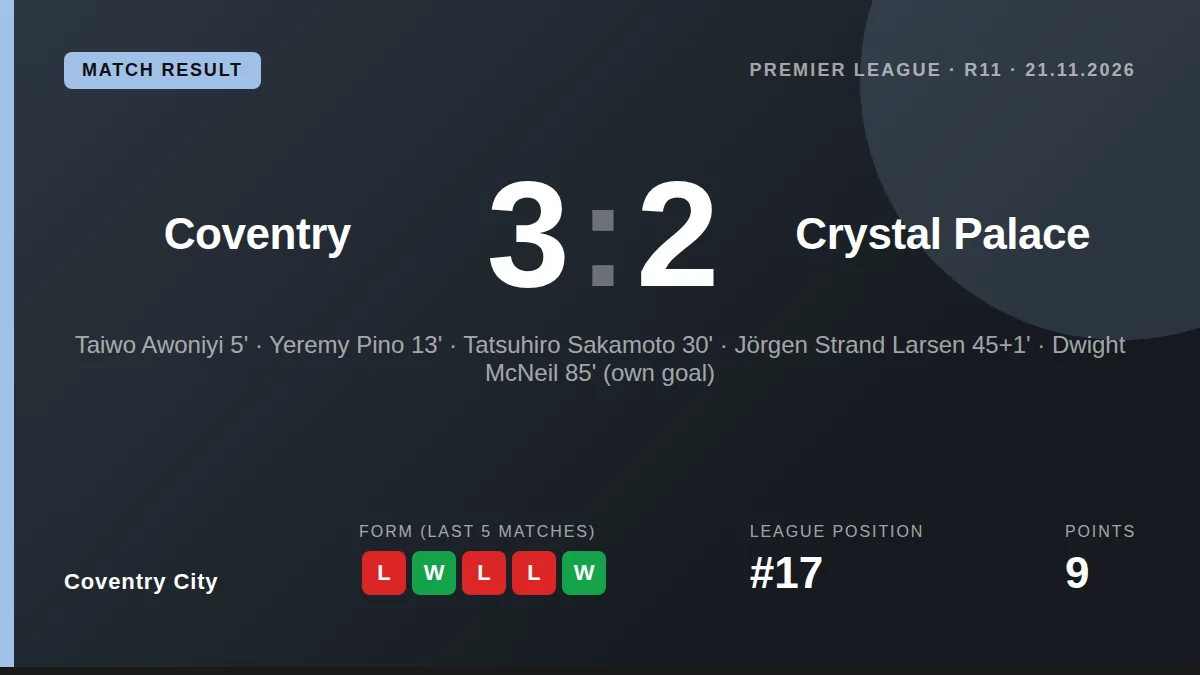

Coventry City face a Premier League financial landscape where the revenue gap with the biggest clubs has widened to a large amount. A report published on Thursday details how the traditional 'big six' have extended their financial dominance over many years.
In the past, the average revenue gap between the big six and a club like Everton was a certain amount. More recently, that gap had ballooned to a much larger figure. The six clubs, Manchester United, Liverpool, Manchester City, Arsenal, Tottenham Hotspur and Chelsea, now generate much more than the rest of the division, allowing for vastly greater spending on squads.
Commercial deals are a key driver, accounting for a large portion of the big six's income. For comparison, commercial revenue makes up a much smaller part of Everton's total, with broadcasting providing the majority. "The big six benefit from their extensive international fanbases, which make them particularly attractive to commercial partners," said football finance professor Kieran Maguire.
European competition further entrenches the divide. UEFA's Champions League 'value pillar' reserves a share of its revenues for clubs with the strongest historical performance. Last season, Manchester City earned an estimated sum from this source, Liverpool another sum and Chelsea a further sum. Newcastle United, by contrast, received a smaller amount.
Even within the elite, stadium capacity creates disparities. Chelsea's Stamford Bridge holds fewer fans than their main rivals. Their matchday revenue grew by a smaller amount over the past decade, while Manchester United's increased by a larger sum and Tottenham's by an even larger sum after moving to a new ground.
The financial pressure is evident across the league. Clubs spent a record amount in the summer transfer window, with many teams breaking their own transfer records. The accounting cost of previous transfers, known as amortisation, has grown substantially in recent years.
Despite the wealth, it does not guarantee success. Clubs like Brighton and Brentford have shown that smart recruitment and player development can compete with bigger budgets. However, smaller clubs have far less margin for error. The big six can afford multiple expensive signings that fail, while other clubs risk serious financial trouble after just a few poor windows.
The Premier League's new squad-cost ratio rules, which allow spending based on a percentage of revenue, are seen to favour those with the highest incomes.